AI in software development
AI assistants now write code, tests and documentation, and carry out entire tasks independently. Used well, they make a team considerably faster. Without guard rails, however, the result is code that nobody understands or is willing to take responsibility for.
I’ll show you how to do this reliably: by following the rules that have always defined good software.
TaskFest, a to-do list with a backend and web and mobile frontends that I am developing in collaboration with an AI assistant, demonstrates what this looks like in a complete project. The full documentation and source code are available on GitHub, along with the rules that govern how the assistant works.
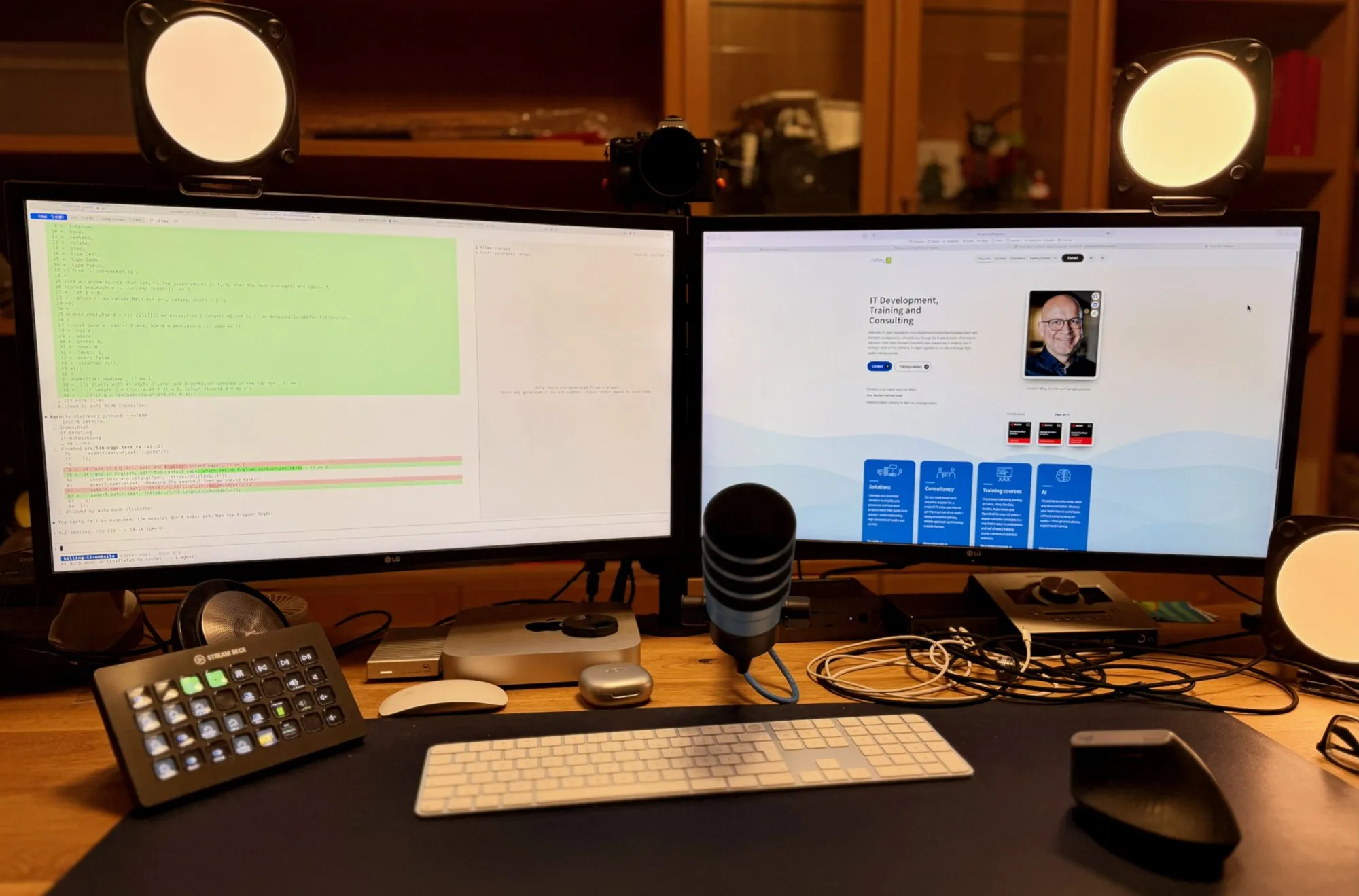
At the University of Osnabrück, I teach Java and AI on the ‘European Technology Law’ Master’s programme: if I can explain development with AI to people who don’t program, I can explain it to your team too.
What I offer
- Consultancy: In which areas does AI help with your development, and in which does it not? I’ll take a look at your projects, processes and constraints, including data protection and how you handle your source code.
- Introducing AI in your team: I will support your team as they undertake their first projects using AI assistants and work with you to develop guidelines tailored to your team.
- Training courses and workshops: AI-assisted development in practice, for developers and DevOps teams alike, with exercises using real code.
- Talks and workshops for management: what AI is capable of in software development today, where its limitations and risks lie, and what it means for your teams – to help inform your decisions.
My approach
AI is no substitute for diligence; it makes it all the more important. That is why I rely on what has proved its worth in development and operations:
- Tests first: Before the AI writes a change, a failing test describes what it should do.
- Automated checks: Builds, tests, code analysis and security checks run in the CI pipeline, for code written by humans and by AI alike.
- Asking for clarification rather than guessing: If a requirement is unclear, the assistant asks for clarification instead of making up a solution.
- People make the decisions: every change is made via a pull request, for which a person is responsible.